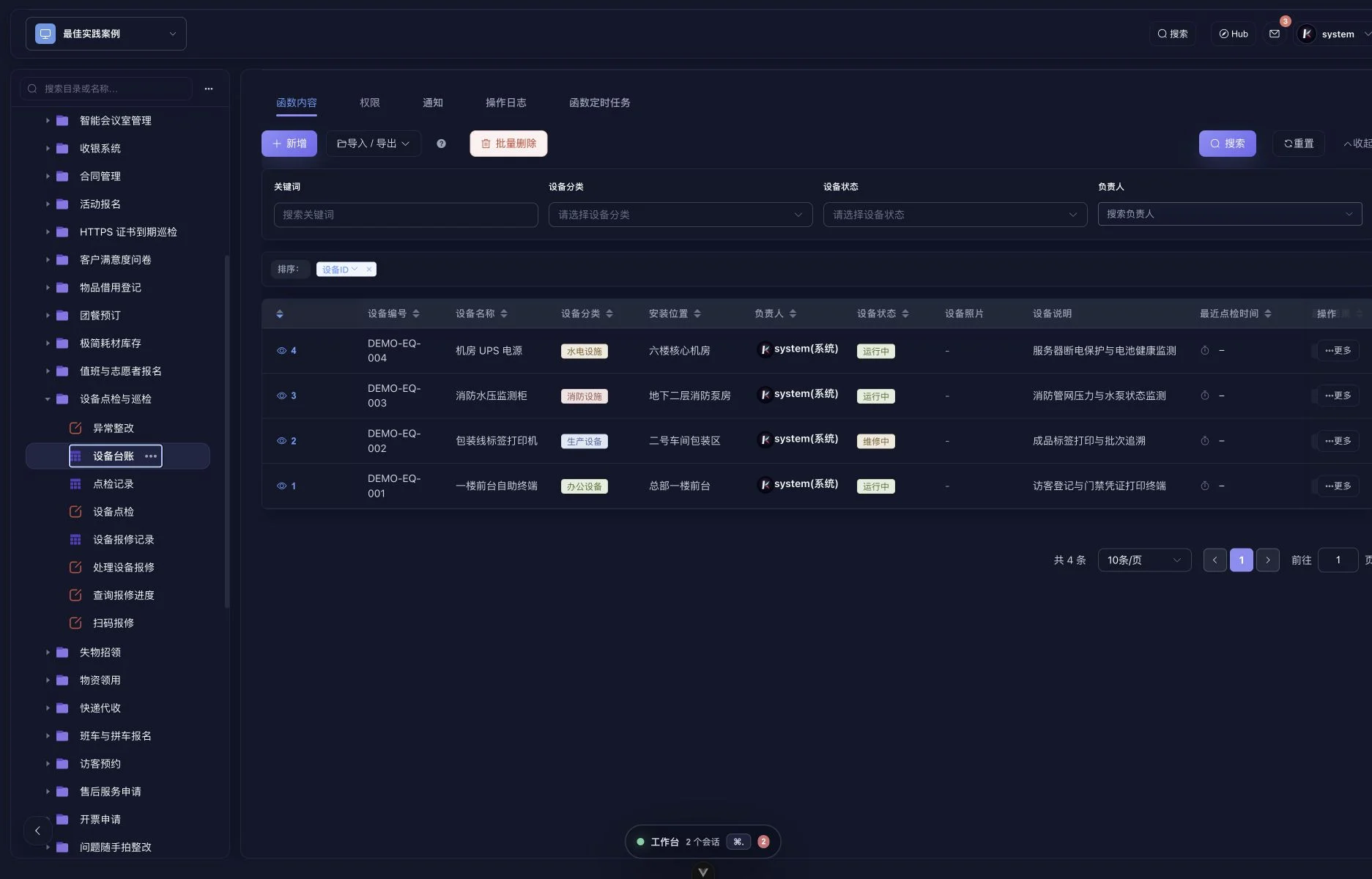
TABLE
See the state of work
Equipment, customers, tickets, and transactions become filterable, collaborative workbenches.
What is kageos?
kageos turns scattered apps, data, and agents into a business file system that keeps growing. People use it directly. AI does real work. Every action has boundaries, results, and records.
01 · Without kageos
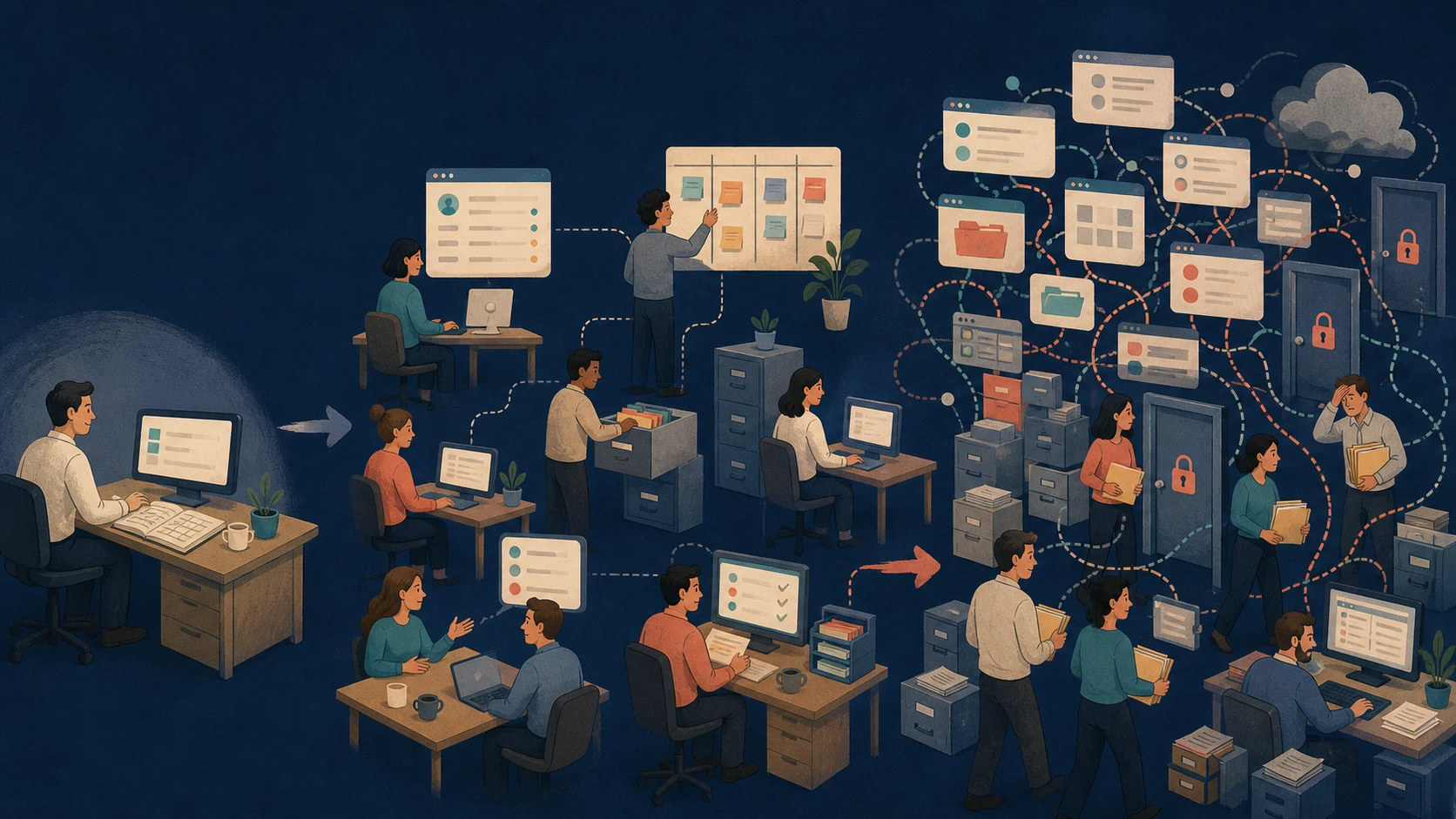
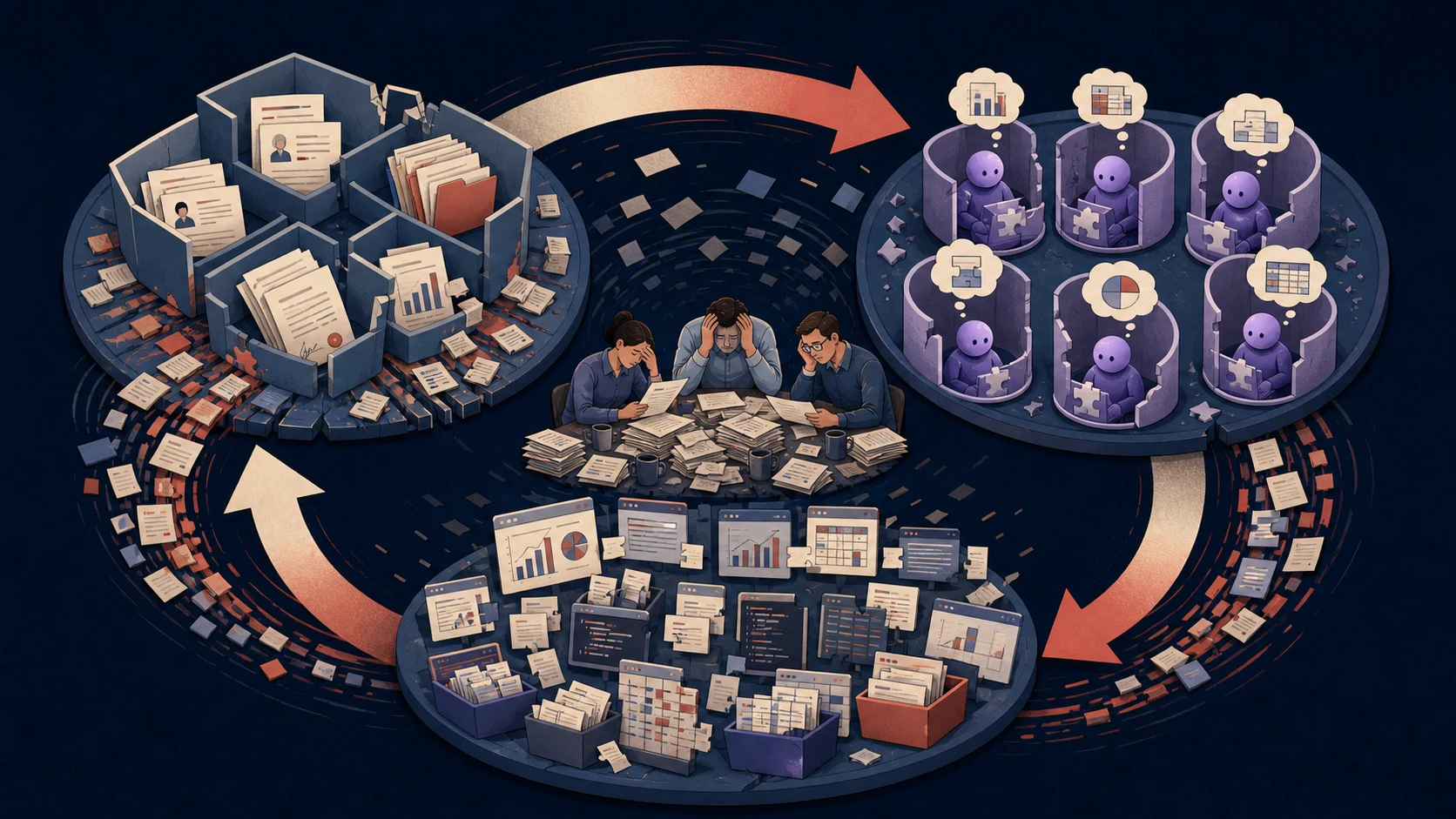
A spreadsheet is enough at the beginning. Then contracts, projects, support, and people arrive—along with a CRM, drive, ticketing, and approval system.
Each tool solves one problem and builds another wall: a new account, data model, permission system, and interface. People become the most expensive API between them.
Software digitized each task. People still connect the company by hand.
02 · The hidden cost
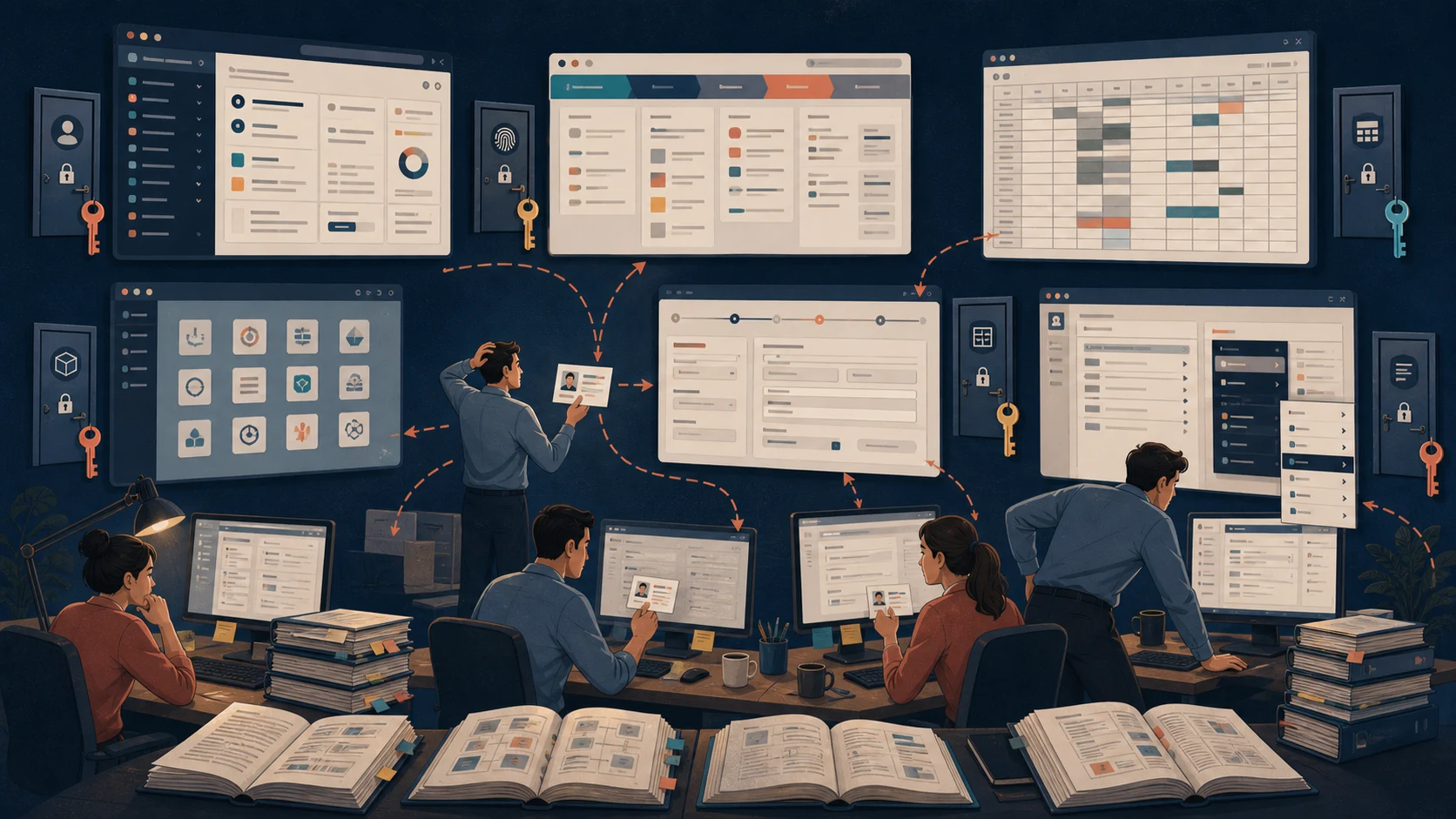
One app navigates from the left, another from the top. The same create, search, and export actions live in different places.
Every new tool makes the company repay the cost of login, training, context switching, reconciliation, integration, and handover.
03 · Why ordinary AI does not fix it
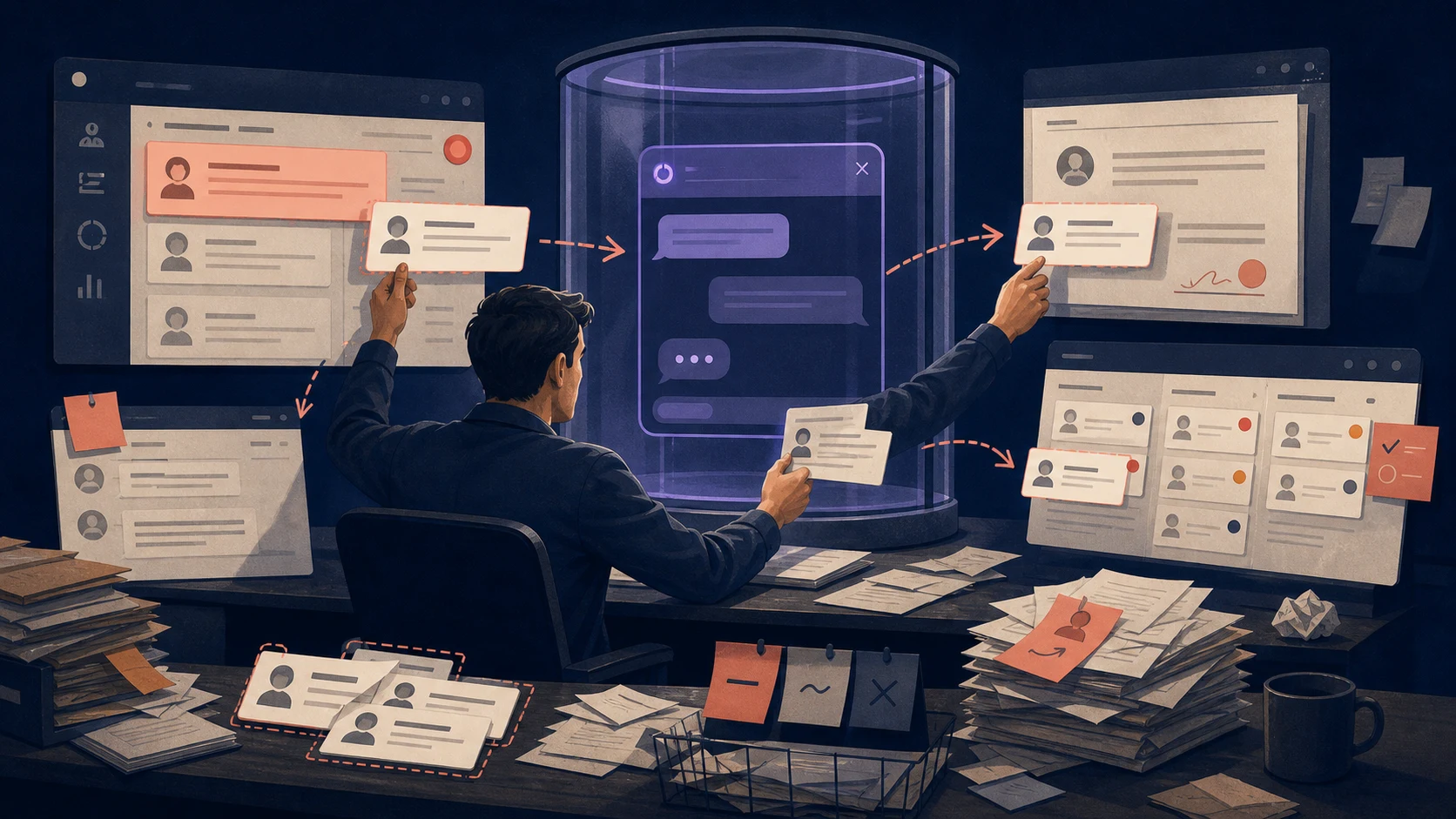
AI cannot tell which record is true, where the next action lives, what it may execute, or where results belong.
People copy data into AI, receive an answer, then copy it back. The company has added another window—not a working system.
AI does not lack intelligence. It lacks business coordinates, reliable interfaces, and execution boundaries.
04 · The vicious cycle
Teams compensate with more scripts, bots, temporary tables, and automation platforms. Each sees a fragment and creates another copy.
Scattered data weakens AI. Weak execution creates more temporary tools. More tools scatter even more data. Software debt compounds every round.
05 · The kageos answer
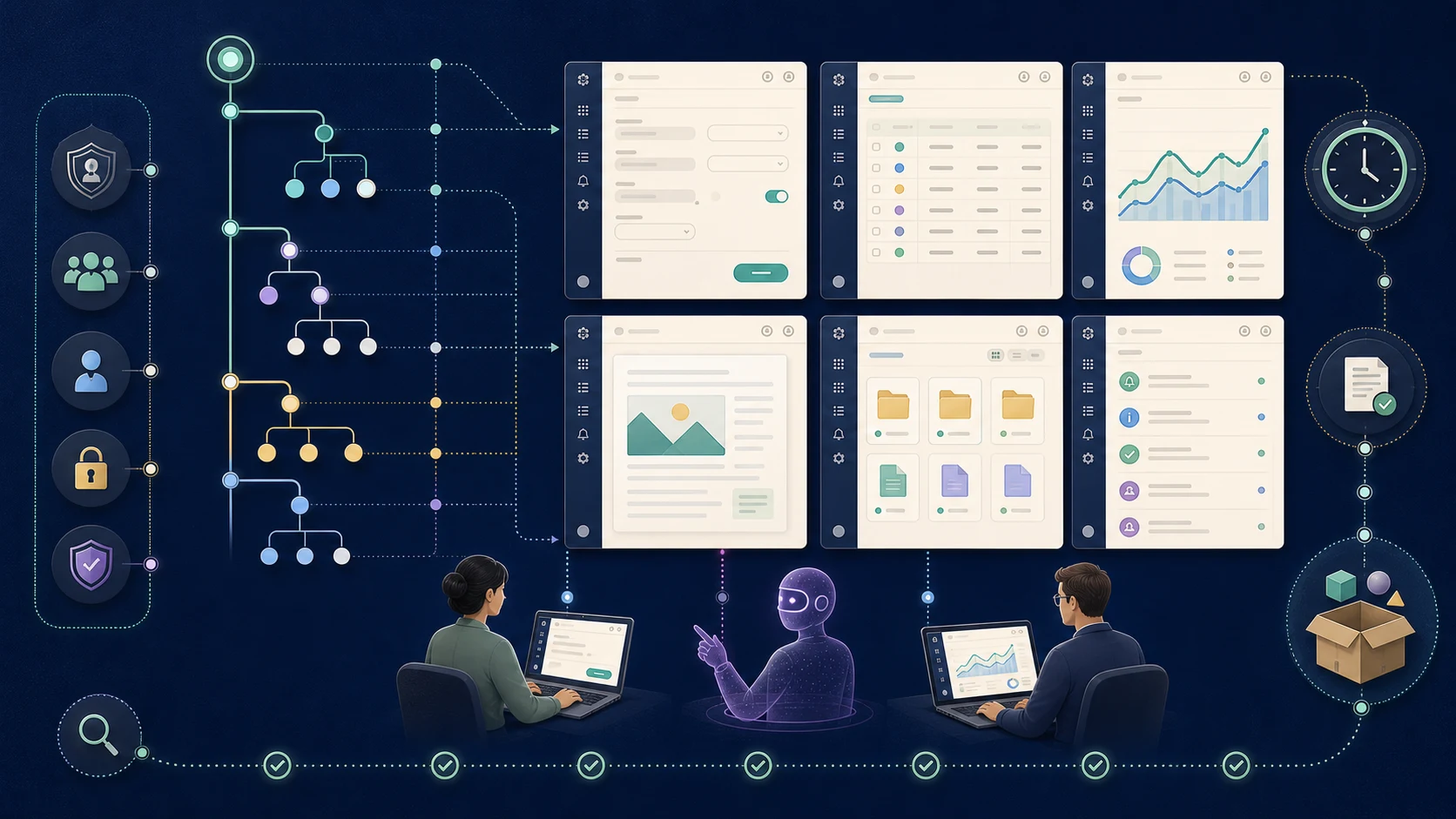
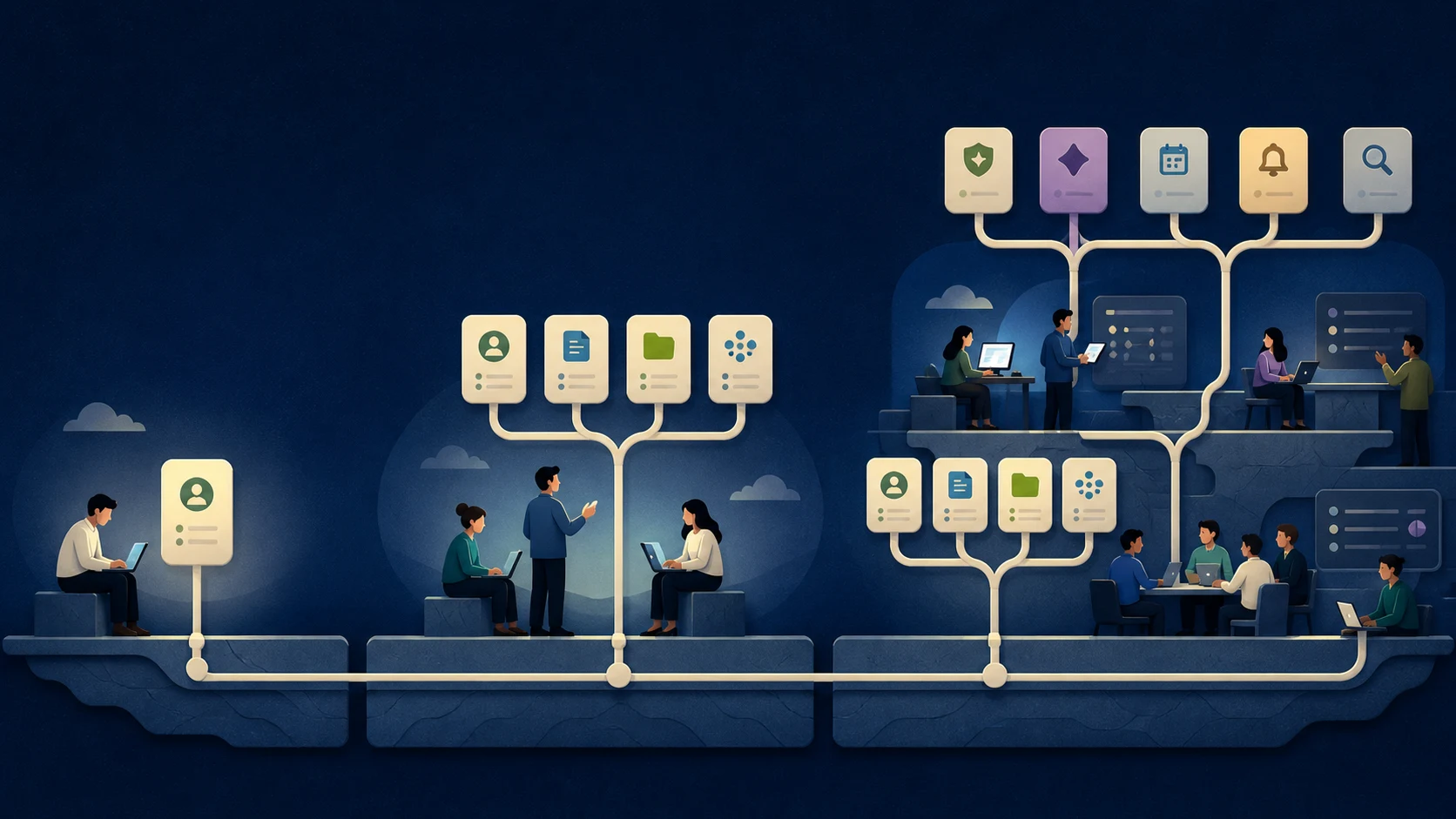
Computers manage millions of files because every file has a directory, a location, and a consistent way to open it. kageos applies the same idea to business.
Customers, contracts, projects, tickets, and automations become directories with stable coordinates. Each can contain forms, tables, charts, docs, files, functions, and agents.
Every directory is a business capability that can run.
06 · From answering to doing
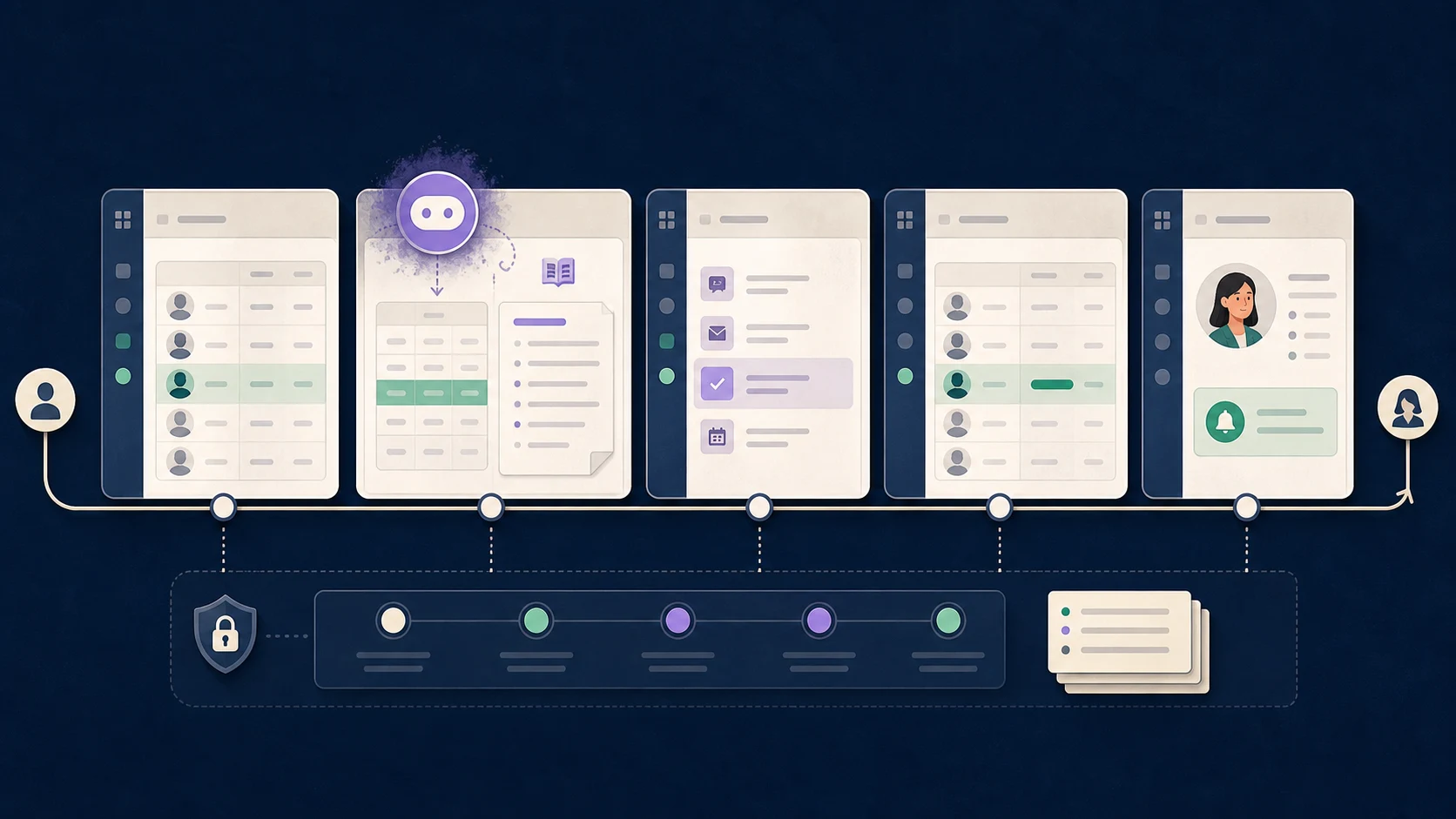
People and AI use the same directories. AI reads real state and runbooks, calls typed actions, and writes results back to the original record.
It notifies the right person and hands uncertain or high-risk decisions back to humans.
07 · Unattended Agent
Give an agent a role, resources, and a schedule. It can observe, act, write back, and notify while nobody is online.
Follow-ups, expiring contracts, unattended tickets, and market intelligence no longer need someone to watch all day. Unattended does not mean ungoverned.
08 · Built to grow
From a founder’s first customer table to contracts, projects, service, and intelligent workers, every capability keeps growing on the same business tree.
Before, every solved problem added another application. With kageos, it adds a capability the company can keep.
Stop buying software islands. Start building your business continent.
One business language
Use a Table to see operations, a Form to collect action, a Chart to find change, and Docs to preserve rules. They are not four separate products. They are four views of the same business directory—and the context and interfaces an Agent needs to work.
TABLE
Equipment, customers, tickets, and transactions become filterable, collaborative workbenches.
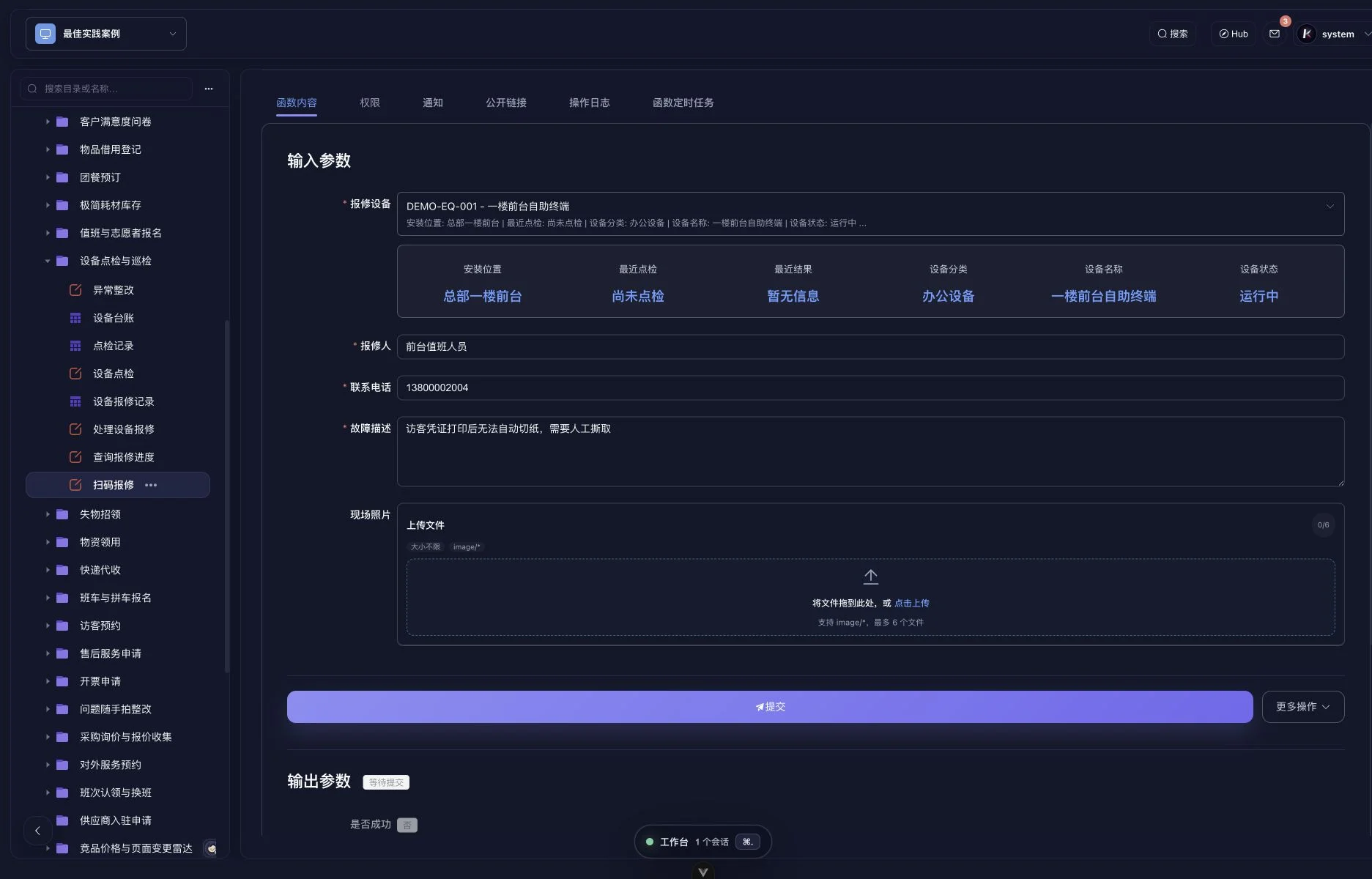
FORM
Repair, checkout, registration, and voting enter a clear process with one submission.
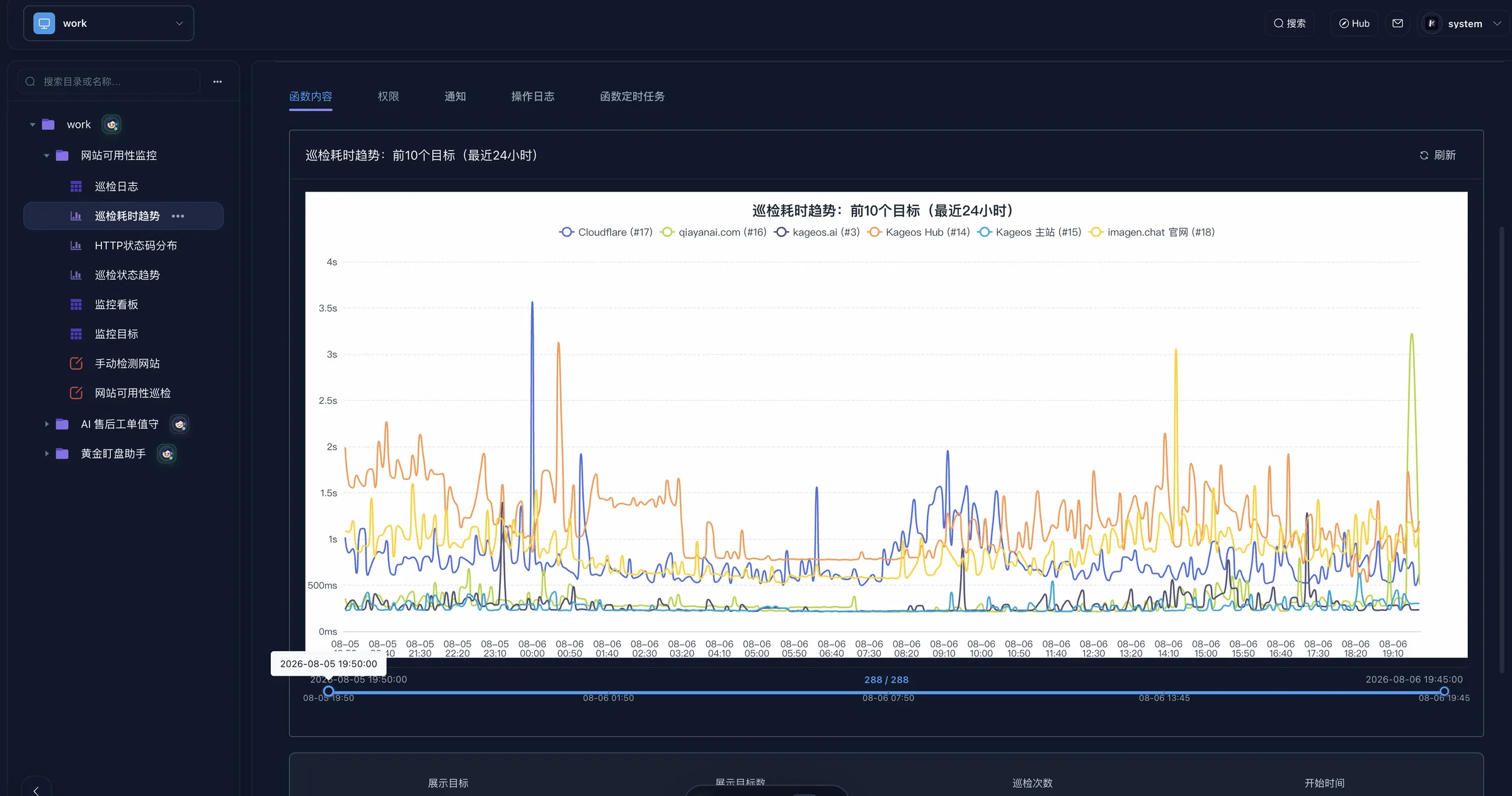
CHART
Turn monitoring, NPS, and operating data into trends, distributions, and anomalies.
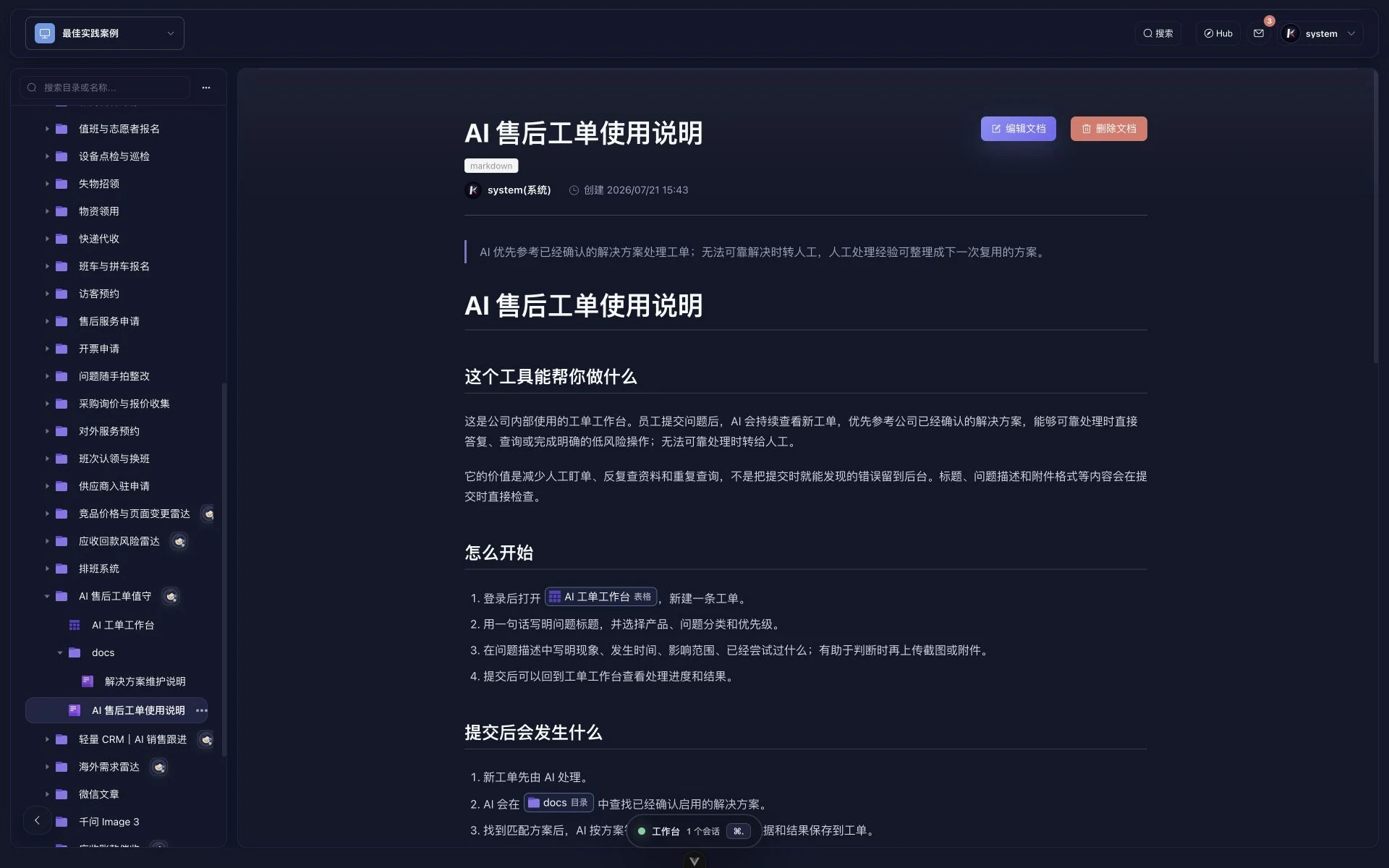
DOCS
People, the workstation, and Agents read the same runbook without copy and paste.
Equipment repair
Scan form → repair desk → status loop
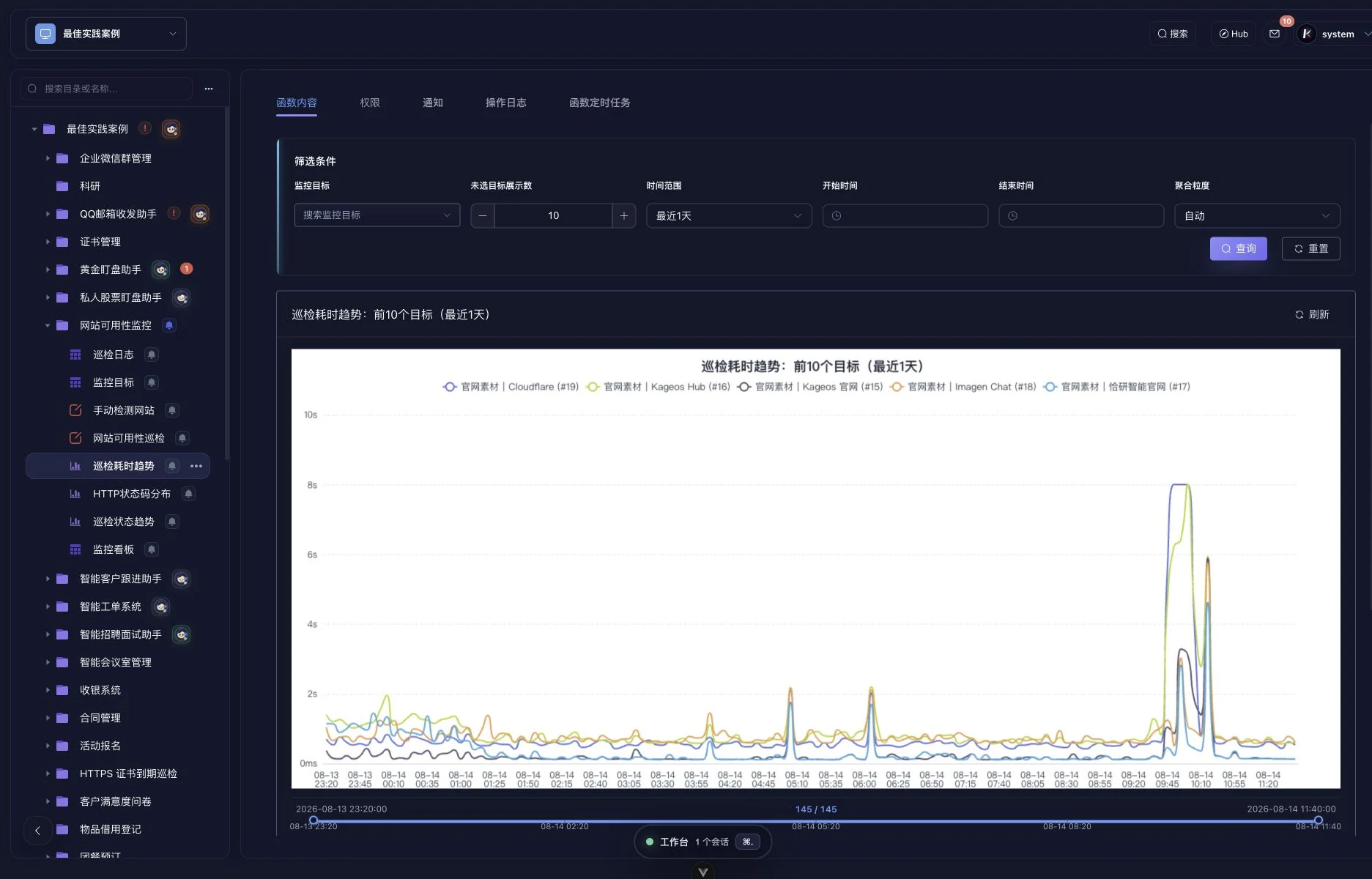
Website monitoring
site ledger → trend chart → scheduled checks
Service desk
ticket Table → business Docs → Agent
Put it in a directory, then let people and AI keep working on the same foundation.
Try kageos